
Renovation Cleaning in Palm Beach Gardens: Dust-Free, Move-In Ready Homes
PALM BEACHES & TREASURE COAST
What Renovation Cleaning Covers, From Rough Clean to Final Detail
Renovation dust is not regular house dust. It's finer, it gets into every seam, and it settles back down for days after the crew leaves. That's why renovation cleaning is really two jobs, not one.
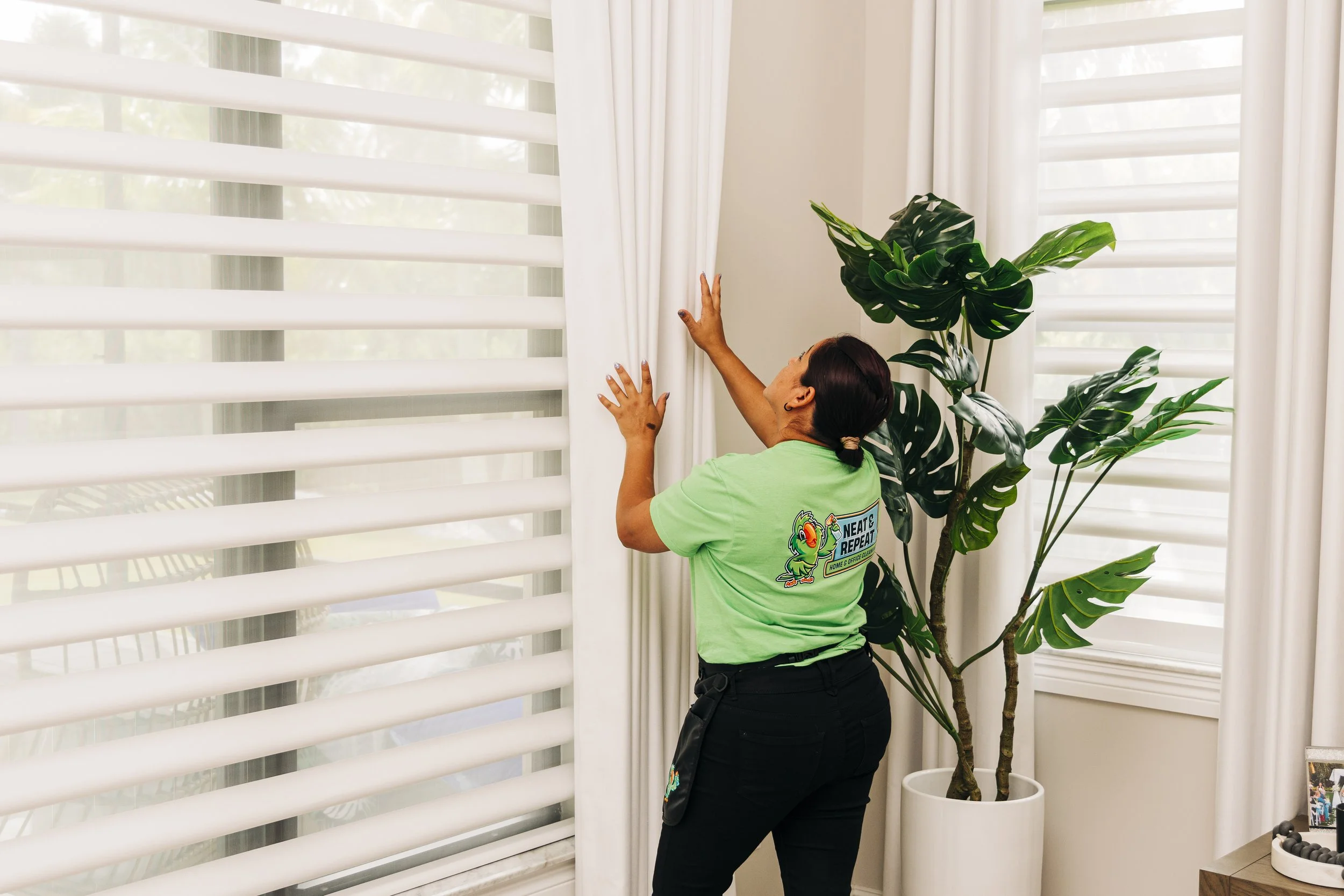
The first pass is the rough clean. This is the heavy lift, when construction debris, drywall dust, adhesive residue, and grit are still sitting thick on every surface. We pull dust out of window tracks, light fixtures, baseboards, and vents. Cabinets get wiped inside and out before anything goes back in them. Floors get a deep sweep and wet pass to lift the film that regular mopping won't touch.
The second pass, a few days later once the air has settled, is the detail clean. This is where we get picky. Interior windows get done streak-free. Kitchens get scrubbed top to bottom, counters, backsplash, inside the cabinets, and the interior of appliances if they were just installed. Bathrooms get every tile line and fixture. Baseboards, door frames, and light switches, the spots everyone forgets, get wiped by hand.
We see this constantly in the bigger renovation jobs around Old Palm and Steeplechase, where marble floors and custom millwork can't handle harsh chemicals or gritty pads. Our neutral-pH products are safe on those finishes and still cut through construction film.
Here's what a full renovation clean usually touches:
All hard floors, vacuumed and wet-cleaned to remove settled dust
Interior windows and sills, inside tracks included
Kitchen cabinets, counters, and interior appliance cleaning
Bathroom fixtures, tile, and grout lines wiped down
Baseboards, vents, light fixtures, and switch plates
Skip either pass and you'll be finding dust in the same spots weeks later.
Why Timing Matters in Humid Palm Beach Gardens Renovations
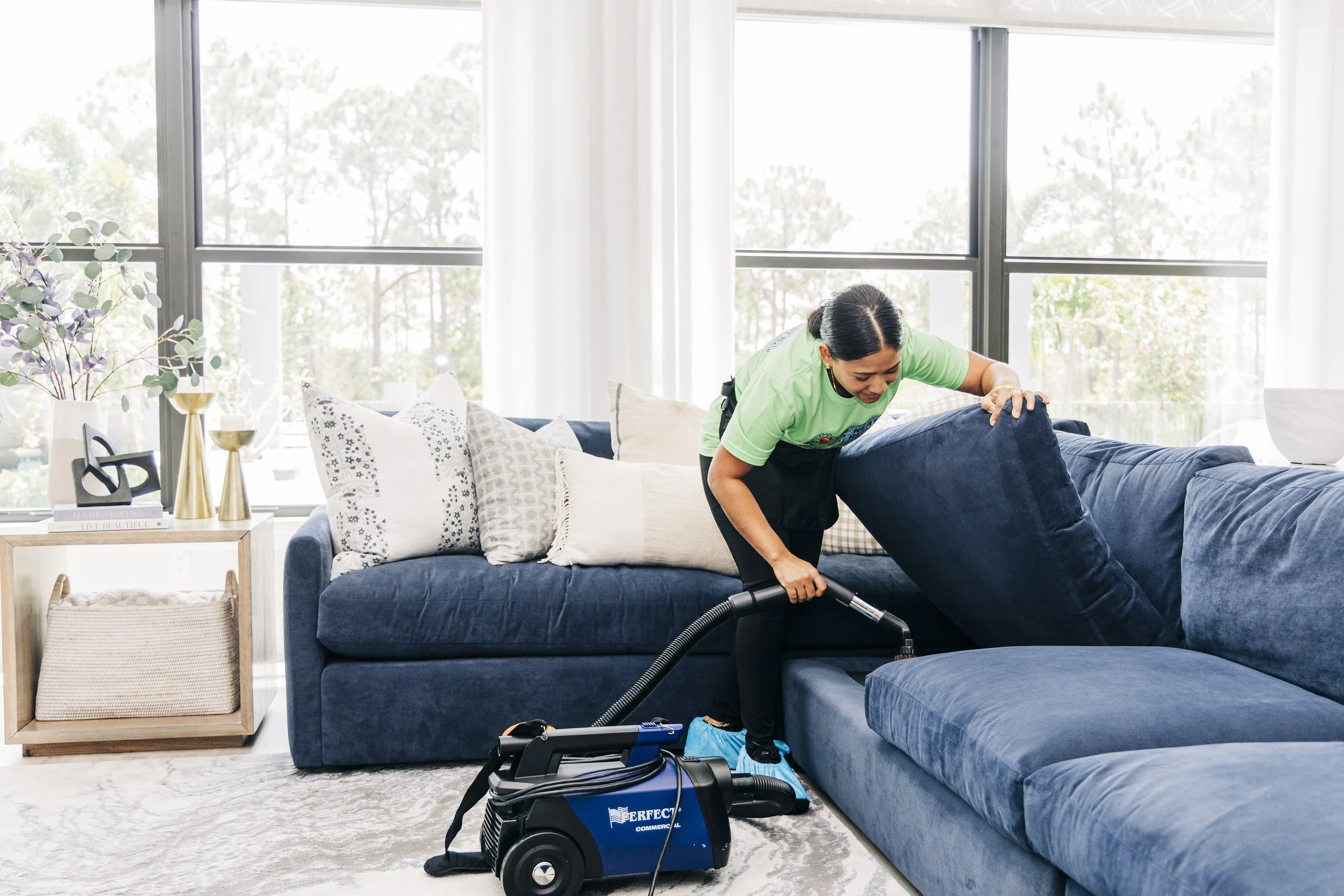
Here's something a lot of homeowners don't think about until it's too late. Renovation dust and Palm Beach Gardens humidity do not mix well. Fine drywall dust and grout haze sit on every surface after a remodel, and once our summer humidity gets into it, that dust can turn into a thin film that's much harder to remove. Wait too long, and what should've been a simple wipe-down turns into a scrubbing job.
We see this every single week during our rainy season, roughly June through September, when afternoon storms push indoor humidity up fast. If a contractor wraps up on a Friday and the home sits closed up over a humid weekend, dust settles into a sticky layer on cabinets, sills, and floors. That's a different job than cleaning fresh, dry dust the same day work ends.
Stone floors make this worse. In estate homes around Old Palm, where marble and limestone are common, dust mixed with humidity can sit against the stone and dull the finish if it's not lifted quickly. Timing isn't a nice-to-have here, it's what protects the surfaces you just paid a contractor to install.
So when should you schedule the clean? Right after the final trade leaves and before you move furniture back in, ideally the same day or the next morning. Not a week later. Not "whenever we get around to it."
A rushed post-construction clean, done too early before caulk or paint fully cures, causes its own problems. But waiting too long invites the humidity issue. That window in the middle is where the real work happens, and it's narrower here than it is in drier climates.
When a Standard Deep Clean Is Enough,
and When It Isn't
Not every project after work needs renovation cleaning. If your contractor only patched drywall in one room and painted it, a regular deep clean handles that fine. Same with a small bathroom refresh, new fixtures, a repaint, minor cabinet swap. Dust settles, sure, but it's not everywhere.
Here's the honest line we draw. If the work stayed contained to one or two rooms and didn't involve sanding, demo, or drywall cutting, you probably don't need us for renovation cleaning. Book a deep clean instead, it'll cost less and get the job done.
Renovation cleaning earns its place when the dust traveled. Whole-home remodels. Kitchen gut jobs. New flooring installed through multiple rooms. Anything with drywall sanding, because that dust gets into HVAC returns and travels through the whole house, not just the room where the work happened. We see this constantly in older sections of Palm Beach Gardens where homes built before more modern HVAC sealing standards let construction dust migrate faster between rooms.
Ask yourself a few things before you call anyone. Did the crew use plastic sheeting and negative air machines, or was it open to the rest of the house? Is there a fine gray film on surfaces two rooms away from where the work happened? Can you run your finger along a baseboard in a room that wasn't touched and still find dust?
If the answer is yes to any of those, you're past deep-clean territory.
And if you're not sure which category your project falls into, that's a fair question to ask over the phone. We'd rather steer you to the right service than book the wrong one.
Getting Your Home Ready Before the Crew Arrives
Renovation dust travels farther than you'd think. It settles behind baseboards, inside vents, on top of ceiling fan blades you forgot existed. Before we come in, there are a few things that make the visit go faster and get you a cleaner result.
First, talk to your contractor about timing. We need the trades finished, or at least done with anything that kicks up dust or debris that day. Sawdust and drywall dust settling on a room we already cleaned means starting over, and nobody wants that.
Clear a path. If your renovation left tools, drop cloths, or leftover materials scattered around, move what you can to one spot. We'll work around what's left, but an open floor plan lets our team get into corners instead of stepping over a table saw.
Got pets? Keep them somewhere quiet that day. Fresh dust and unfamiliar cleaning smells, even our neutral-pH ones, can stress an animal out during a big cleanup.
Here's something homeowners in newer construction around Palm Beach Gardens don't always expect: spray foam insulation and drywall mud dust cling to HVAC returns fast. If your renovation touched ductwork or attic space, open access panels ahead of time so we can reach the vents without hunting for a screwdriver.
One more thing. If cabinets or countertops were just installed, hold off on stocking them with dishes or food until after we've wiped every surface down. Sealant dust and grout residue like to hide in corners you won't notice until it's on a plate.
You don't need to deep clean before we show up. That's the whole point of calling us. Just clear the big stuff, keep the pets out of the way, and let our team handle the rest.
What a Truly Move-In Ready Finish Looks Like
Here's the thing nobody tells you before a renovation: the contractor's "clean" and our clean are not the same job. Contractors sweep. We restore.
Move-in ready means every surface can be touched without a paper towel in your hand first. It means you open a kitchen drawer and there's no drywall dust sitting in the corners. It means the window sills don't have that gritty film that shows up weeks after the crew leaves, the kind that keeps resettling no matter how many times you wipe it.
A real finish covers these areas, every time:
Inside and outside of all cabinets and drawers, top to bottom, including hinges where dust hides
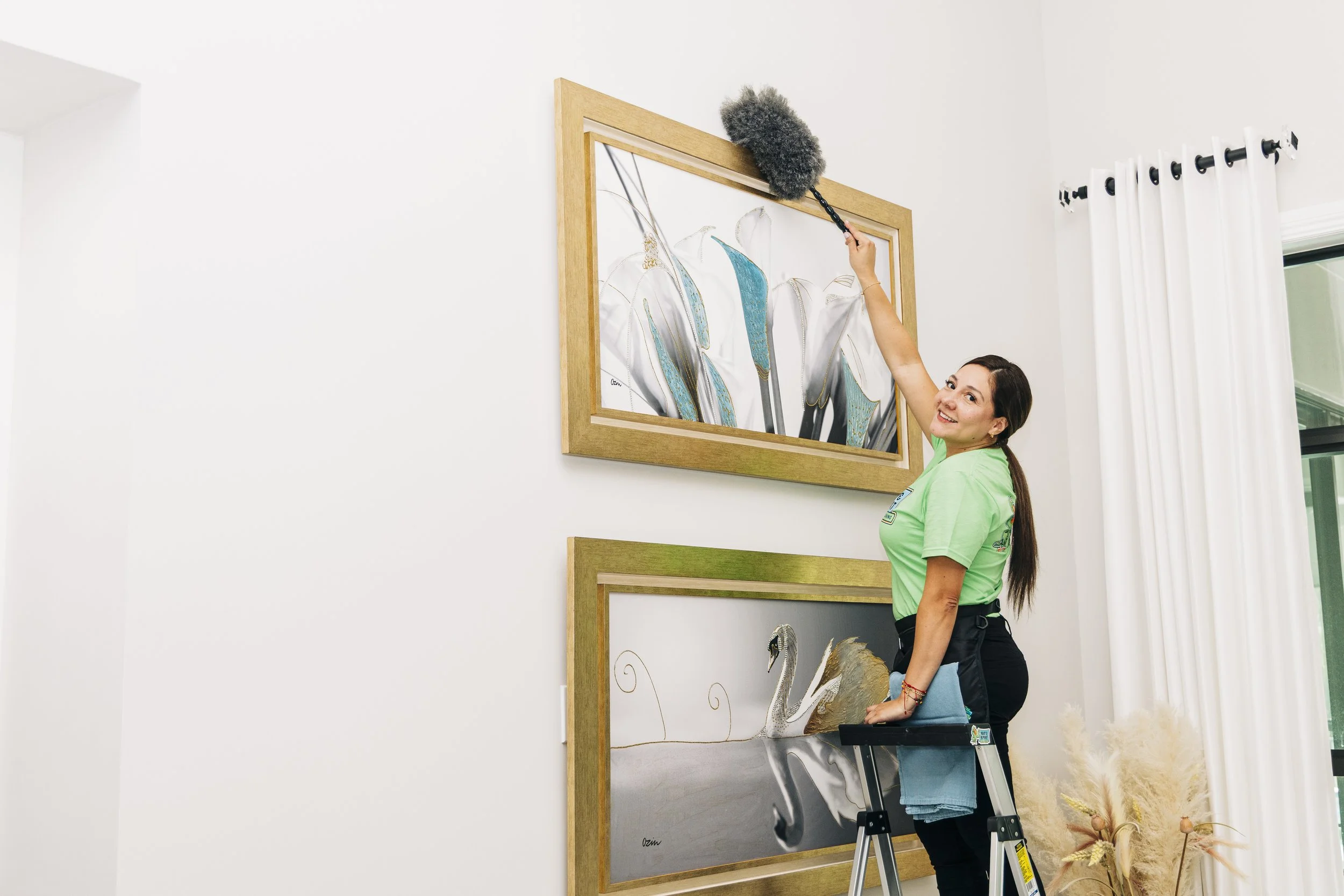
Light fixtures, ceiling fans, and vents wiped down, not just dusted around
Baseboards, door frames, and window tracks scrubbed, since that's where fine particle dust settles hardest
Interior appliance cleaning inside ovens, microwaves, and refrigerators if they were left open during the work
Floors detail cleaned by hand in corners and edges, not just run over with a mop
In a Steeplechase remodel, we've seen how tile and stone dust from cabinet or countertop installs works its way into grout lines and cabinet tracks. It takes real elbow work to pull that out, not a quick pass.
We use neutral-pH products through the whole process. Fresh paint, new stone counters, and refinished floors are all sensitive to harsh chemicals in that first stretch after installation. The wrong cleaner can dull a finish that just cost real money to install.
You'll know it's done right the moment you run a hand across a shelf and feel nothing. No haze on the mirrors. No white dust ghosting the baseboards a week later. That's the standard we hold ourselves to on every renovation job we take on.
FAQs
-
Book your cleaning for the same day the last trade leaves, or first thing the next morning. In Palm Beach Gardens, humidity moves in fast during rainy season, roughly June through September, and it turns fresh drywall dust into a sticky film within a day or two. Waiting a week means what should've been a simple wipe-down turns into real scrubbing, especially on stone floors. If your contractor gives you a wrap date, call us before that date, not after.
-
Clear a path so we can reach corners and surfaces without stepping over leftover materials. Talk to your contractor first, we need the trades finished with any work that kicks up dust that same day, or we're cleaning a surface that gets dirty again an hour later. Move tools, drop cloths, and debris into one spot if you can. If you have pets, keep them in a quiet room, since fresh dust and cleaning products can bother them on cleaning day.
-
It depends on how far the dust traveled. If your contractor patched drywall in one room or swapped a few fixtures, a standard deep clean handles it fine and costs less. Renovation cleaning earns its place after whole-home remodels, kitchen gut jobs, or any project involving drywall sanding, because that dust gets pulled into HVAC returns and spreads through rooms that weren't even touched. If you find a gray film two rooms away from the work zone, you're past deep-clean territory.
-
Humid air turns fine construction dust into a film that clings to surfaces instead of wiping away easily. We see this every week during rainy season, when afternoon storms push indoor humidity up while a home sits closed after the crew leaves. In estate homes around Old Palm, where marble and limestone floors are common, that dust-and-humidity mix can sit against the stone and dull the finish if it's not lifted quickly. That's why timing your cleaning right after construction matters more here than in drier climates.
-
Window tracks, vents, ceiling fan blades, and the inside of light fixtures are the spots homeowners forget, and where drywall dust settles thickest. We also check baseboards, door frames, and switch plates by hand, since a mop or vacuum alone won't lift dust from those tight seams. In older Palm Beach Gardens homes with less modern HVAC sealing, dust migrates between rooms faster, so we check spaces beyond the immediate work zone too, not just the room where the renovation happened.
-
Yes, as long as the right products and methods are used. Harsh chemicals and gritty pads can dull or scratch marble, limestone, and custom millwork, finishes we see often in bigger renovation jobs around Old Palm and Steeplechase. Neutral-pH cleaning products cut through construction film without damaging those surfaces. If your renovation included new stone floors or high-end cabinetry, ask upfront what products will be used before you book the cleaning.
Client Testimonials
“I used to spend my weekends catching up on cleaning, and it felt endless. Neat & Repeat is incredibly reliable, same friendly faces every time, always on schedule, and now my home looks amazing, and I actually get to enjoy my weekends again.”
– Lisa M.


Why Homeowners & Businesses
Choose Us
Over and Over, We’ve Got You Covered!Family-Owned & Operated

People & Pet Friendly Cleaning Products

100% Satisfaction Guaranteed

Licensed, Bonded & Insured

Experienced & Friendly Technicians

Attention to Detail at Every Visit

Beautifully Clean. Effortlessly Calm. Consistently Exceptional.